低频栏目
审稿时间:暂无参考数据,审稿时间不确定!
见刊周期:-
温馨提示:以上只是参考信息,实际情况会根据投稿主题、稿件质量和数量、审稿流程有所差异。想获得更准确信息请联系期刊的编辑部进行咨询。
1、投稿方式:在线投稿。
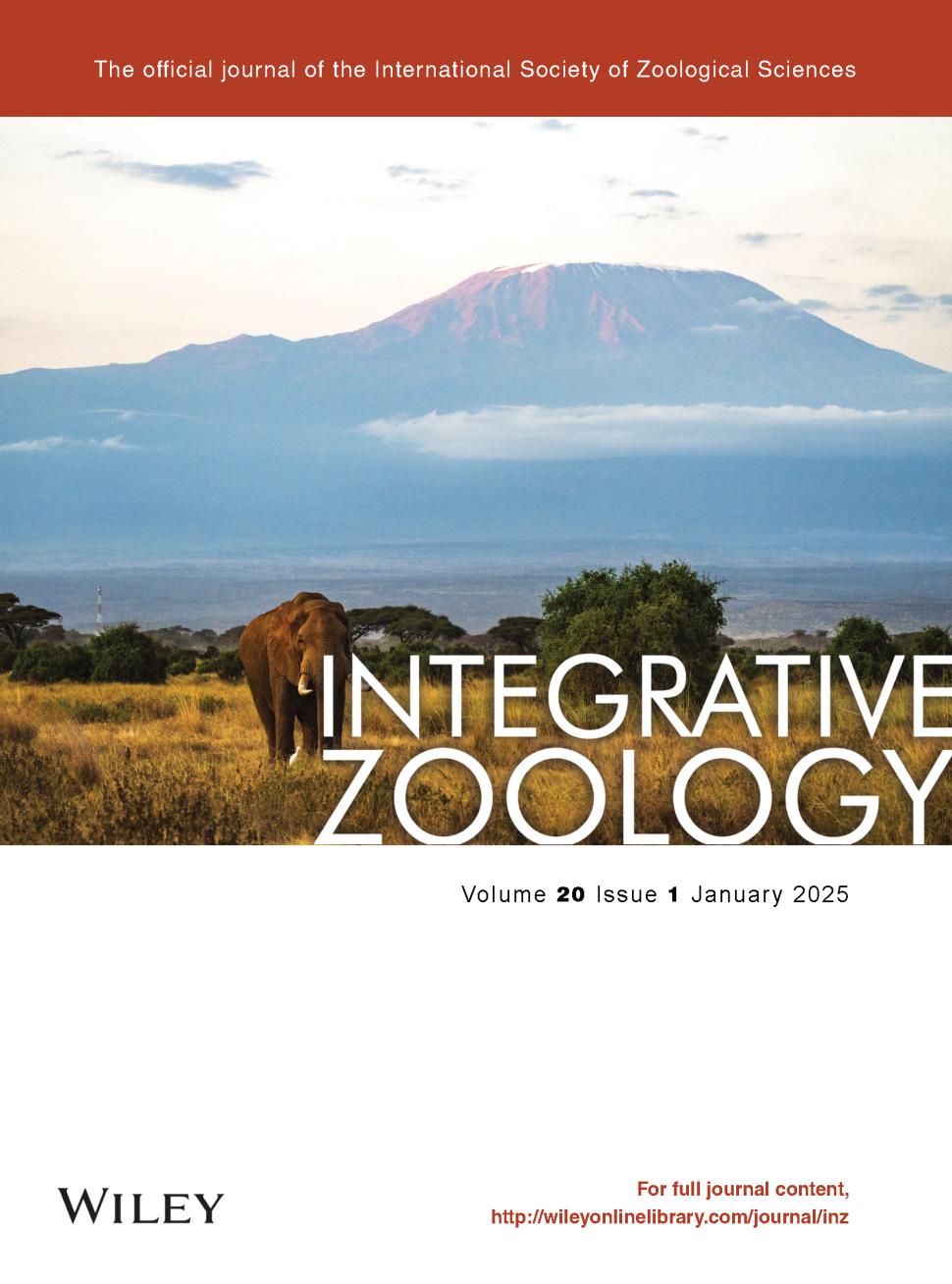
2、刊内网址(202501期):
http://wileyonlinelibrary.com/journal/inz
自动跳转至:
https://onlinelibrary.wiley.com/journal/17494877
3、投稿系统:https://mc03.manuscriptcentral.com/inz
4、主办单位官网:
http://www.ioz.cas.cn/gb2018/cbw/xsqk/201805/t20180507_5007418.html
5、官网电话:010-64807295
6、官网邮箱:inz@ioz.ac.cn
7、出刊日期:双月刊,逢双月出版。
2025年8月13日星期三
《整合动物学(英文版)》投稿指南
【官网信息】
1. SUBMISSION
Authors
should kindly note that submission implies that the content has not
been published or submitted for publication elsewhere except as a brief
abstract in the proceedings of a scientific meeting or symposium.
Once
the submission materials have been prepared in accordance with the
Author Guidelines, manuscripts should be submitted online at
http://mc03.manuscriptcentral.com/inz
The
submission system will prompt authors to use an ORCID iD (a unique
author identifier) to help distinguish their work from that of other
researchers. Click here to find out more.
Click here for more details on how to use ScholarOne.
Please direct your queries to the Editorial Office of Integrative Zoology:
Institute of Zoology
C-506, 1-5 Beichen Xi Road
Beijing 100101
China
Tel/fax: 8610 6480 7295
Email to: inz@ioz.ac.cn
2. AIMS AND SCOPE
official journal of the International Society of Zoological Sciences,
Integrative Zoology focuses on zoology as an integrative discipline
encompassing all aspects of animal life. It presents a broader
perspective of many levels of zoological inquiry, both spatial and
temporal, and encourages cooperation between zoology and other
disciplines including, but not limited to, physics, computer science,
social science, ethics, teaching, paleontology, molecular biology,
physiology, behavior, ecology and the built environment. It also looks
at the animal-human interaction through exploring animal-plant
interactions, microbe/pathogen effects and global changes on the
environment and human society.
Integrative topics of greatest interest to the journal include:
(1) Animals & climate change;
(2) Animals & pollution;
(3) Animals & infectious diseases;
(4) Animals & biological invasions;
(5) Animal-plant interactions;
(6) Zoogeography & paleontology;
(7) Neurons, genes & behavior;
(8) Molecular ecology & evolution;
(9) Physiological adaptations.
3. PREPARING THE SUBMISSION
Word length
The length of an article (including references and tables) should not exceed 10,000 words.
General Style Points
The following points provide general advice on formatting and style.
•
Spelling: The journal uses US spelling and authors should therefore
follow the latest edition of the Merriam–Webster’s Collegiate
Dictionary. For example, behavior not behaviour; fertilization not
fertilisation.
Abbreviations: Abbreviations should be used sparingly – only where they
ease the reader’s task by reducing repetition of long, technical terms.
Initially use the word in full, followed by the abbreviation in
parentheses. Thereafter use the abbreviation only.
• Units of measurement: All measurements must be given in SI or SI-derived units. For example 400 m, 23.4 s, 87 km, etc.
Numbers: Numbers under 10 are spelt out, except for: measurements with a
unit (8mmol/l); age (6 weeks old), or lists with other numbers (11
dogs, 9 cats, 4 gerbils).
Zoological nomenclature
All
papers must conform to the latest edition of the International Code of
Zoological Nomenclature. Upon its first use in the title, abstract and
text, the common name of a species should be followed by the name
(genus, species and authority) in parentheses. For example: Taenia
diminuta Ruldophi, 1819. Genus names should not be abbreviated at the
beginning of paragraphs.
......
更多详情:
https://onlinelibrary.wiley.com/page/journal/17494877/homepage/forauthors.html